


Science Books for 3rd Graders
We’re passionate about ensuring literacy is accessible to every child, as it is essential for a happy, successful life. Find the best science books for 3rd graders featuring experiments and scientific discoveries. These children’s books for ages 7-8 combine fascinating science concepts with grade-appropriate reading levels perfect for elementary students.
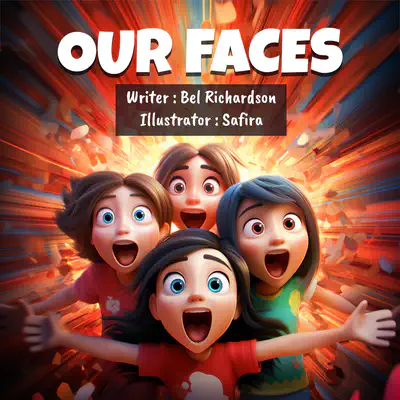
Our Faces
Did you know your face can tell a story without saying a single word? From big, bright smiles to scrunched-up frowns, our faces show the world exactly how we’re feeling inside. But what happens to your face when you’re brave? Or nervous? Or when you see something super cool like a baby elephant playing? Discover the amazing ways our faces change with every emotion we feel!
Little Book of Big Facts: Biology
Did you know that octopuses are super smart and can use tools just like monkeys? Explore the amazing world of biology and discover how plants and animals adapt to survive in different places, why some creatures look alike, and how scientists unlock the secrets hidden in our DNA. Get ready to uncover the incredible connections between all living things on Earth!

In My Garden
I love spending time in my garden because it is such a special place. There is a lot of life and activity there, and I enjoy taking care of it.
Frequently Asked Questions
How do science books for 3rd graders support the reading-to-learn transition?
By third grade, children shift from decoding practice to using reading as a tool for acquiring knowledge – what Chall’s Stages of Reading Development (1983) calls the “reading to learn” phase. Science books for 3rd graders accelerate this shift by giving children genuinely new information about life cycles, weather, or forces and motion wrapped in age-appropriate text. The National Reading Panel (2000) found that comprehension improves when children read purposefully, and curiosity-driven science content provides exactly that purpose. On Bookbot, science picture books for third grade are available on the website, with many titles free to read.
What science vocabulary do 3rd grade readers learn from science books?
Science books for 3rd grade readers introduce terms like “evaporation,” “organism,” “gravity,” and “ecosystem” within story contexts that make meaning clear. Scarborough’s Reading Rope (2001) identifies vocabulary and background knowledge as essential strands of skilled reading, and science-themed content builds both simultaneously. On Bookbot, science books for 7 year olds are leveled by a phonics-based scope and sequence so children meet new words at a manageable pace. For more on the role of phonics in word learning, see our article on what is phonics.
Can science books for 7 year olds be used alongside classroom lessons?
Science books for 7 year olds make excellent supplements to classroom instruction because they let children revisit concepts like ecosystems or the water cycle through a different format. Li et al. (2025) highlight how repeated exposure to content through varied reading materials deepens understanding. On Bookbot, science picture books for third grade are available on the website, with many titles free to read, so teachers and parents can easily assign additional reading that reinforces what was taught in class.
Where can I find science picture books for third grade?
Bookbot provides science picture books for third grade on the website, with many titles free to read. Research by Ehri et al. (2001) shows that systematic, level-matched practice produces the strongest reading gains, and every Bookbot title is organised by phonics level so 3rd graders tackle science books for 3rd grade readers at the right difficulty.